Used clothing collection container from faircollect
Greenbox
Used clothing collection container from faircollect
Greenbox
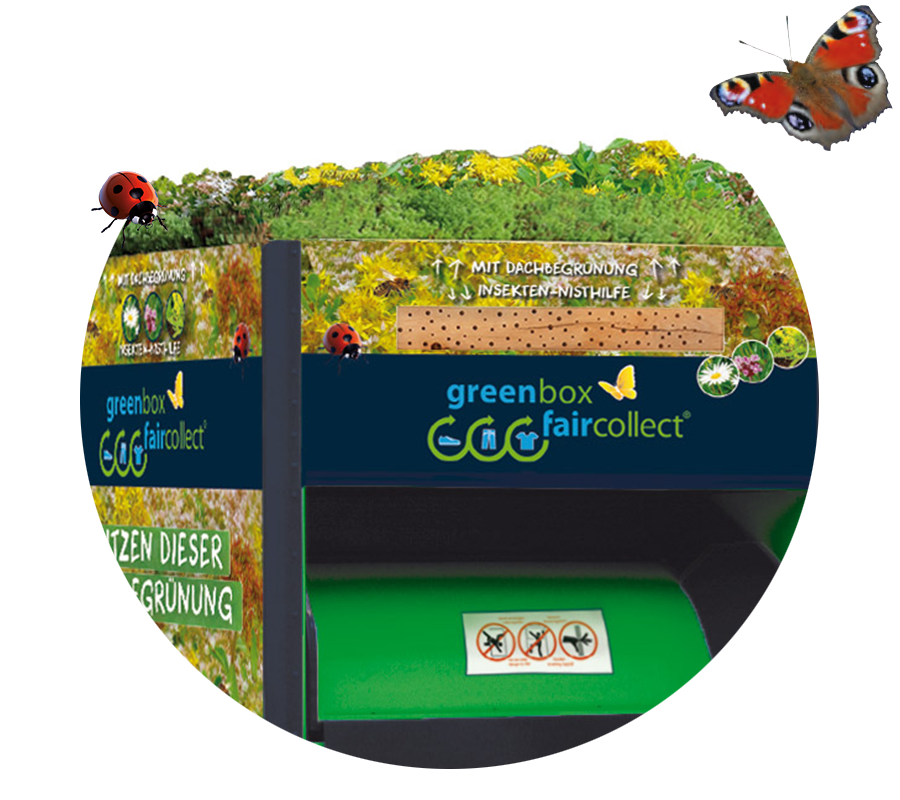
greenbox - The Clothing Donation Container with a Green Roof
INNOVATIVE & UNIQUE
Plant Diversity
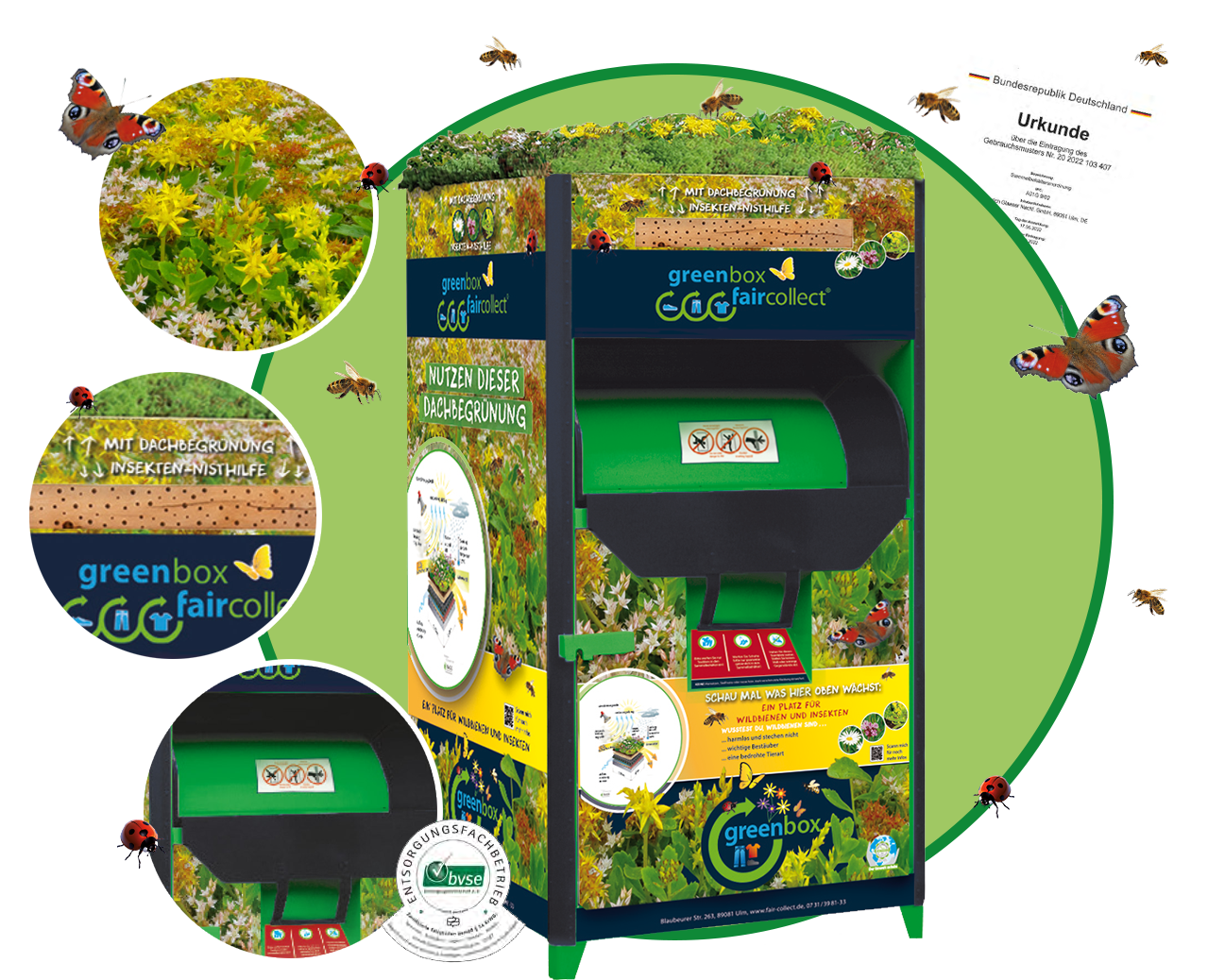
GREEN ROOF
- Very low-maintenance planting
- Colorful, diverse selection of perennial plants
- Wide variety of flowers with a long blooming season
Biodiversity
INSECT NESTING AID
- Nesting opportunities for harmless wild bees and other insects
- Important support for preserving the ecosystem
Technology & Design
INNOVATIVE & UNIQUE
- TÜV- and CE-certified collection container
- Lower loading height for easier access
- Easy operation with an air-pressure-assisted loading flap
- Container dimensions: 219 × 109 × 108 cm (H × W × D)
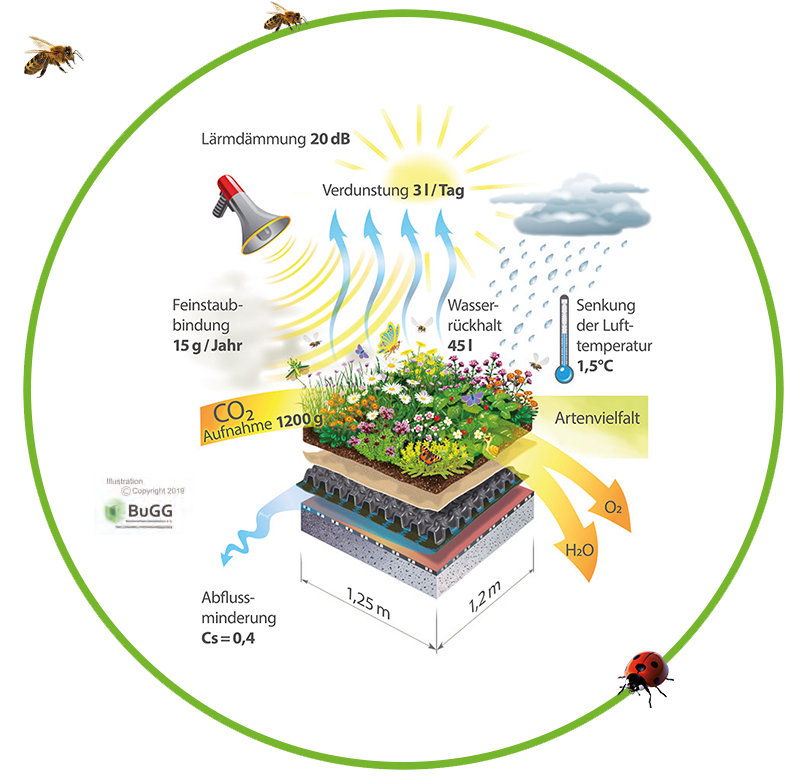
By the Numbers
Fact Check
- Noise reduction: Can reduce surrounding noise levels by up to 20 dB.
- Evaporation: 3 L of water evaporate daily.
- Air temperature reduction: Lowers air temperature by up to 1.5 °C² (through evaporative cooling).
- Runoff reduction (Cs = 0.4): Initially retains 60% of rainwater that cannot be stored within the roof structure.
- CO₂ absorption: Absorbs 1,200 g of carbon dioxide per year.
- Fine dust capture: Captures 15 g of fine particulate matter per year.
- Releases H₂O and O₂.
- Water retention: Stores up to 45 L of water, allowing the green roof to thrive without additional irrigation.
Benefits for the Ecosystem
SUSTAINABLE – SPECIES PROTECTION – POLLINATOR STEPPING STONES
- Insects help preserve biodiversity in flora and fauna.
- Acts as a pollinator stepping stone in urban areas by providing insects with places to feed and reproduce.
- Creates intermediate habitats for pollination.
- Also provides food for insect-eating animals such as birds and many others.
Benefits for Site Hosts
MUNICIPAL – COMMERCIAL – PRIVATE
- Attractive, aesthetically pleasing appearance.
- Innovative image of the greenbox.
- Positive effects from increased insect populations.
- The greenbox serves as a pioneering example, as green roofs will become increasingly important for improving the climate in urban areas.
Benefit from the positive social image of faircollect. With its environmentally responsible and sustainable recyclable collection system and the innovative greenbox, you too can contribute to environmental and species protection.
The attractively designed, species-friendly collection boxes are eye-catching features and valuable pollinator stepping stones in every city. All you need is 1.5 m² of easily accessible, high-traffic space to become a faircollect partner.
If you have any questions regarding the collection of deposited textile recyclables or any other inquiries, we are happy to assist you.
What Blooms on the Greenbox
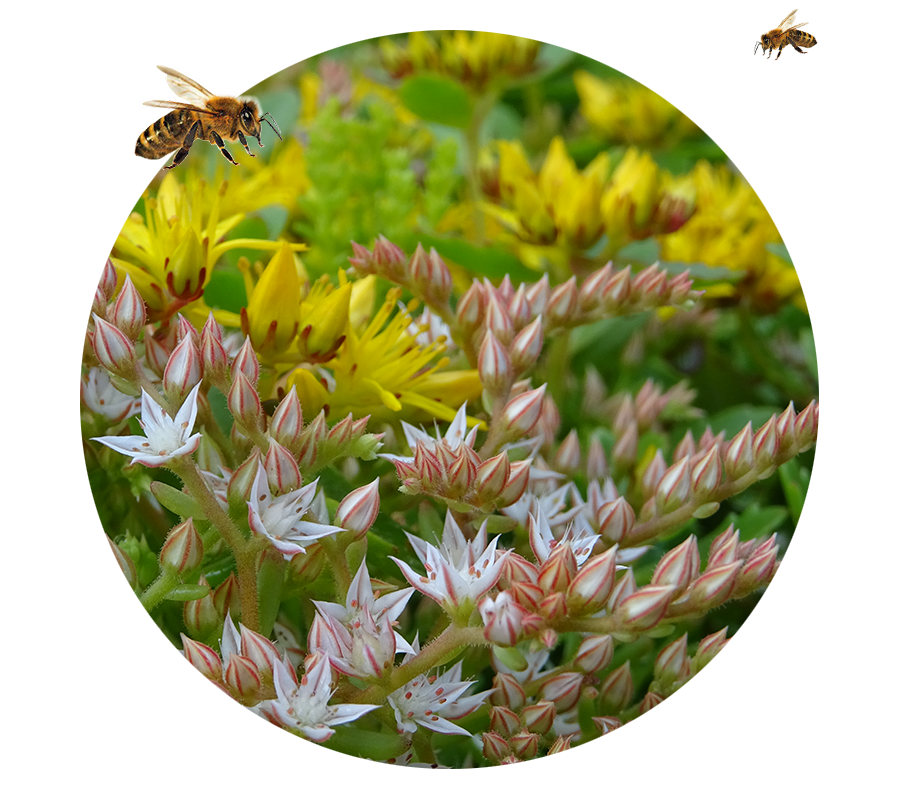
- The foundation of the green roof is a mix of Sedum plants, creating a colorful display of white, yellow, and pink blooms.
- To increase the attractiveness of the vegetation, we have also sown seeds of wildflowers and medicinal herbs.
- This seed mix contains no grasses—it was specially developed by us.
OUR FOCUS
- Achieving the longest possible flowering season.
- Providing highly insect-friendly blossoms. From the second year onward, the Sedum planting is complemented by a rich food source for wild bees and butterflies.
- Since the mix consists almost entirely of wildflower seeds, a little patience is required. For most species, it takes about two years from sowing to flowering.
Insect Nesting Aid
- Our insect nesting aid, located above the deposit flap, is made from high-quality wood. We chose seasoned oak because drilling into the grain helps prevent cracking. Wild bees avoid cracked wood, as it can damage their wings while laying eggs. This ensures our insect nesting aid remains suitable for many years.
- The nesting holes range from 3 to 9 mm in diameter, making the nesting aid suitable for as many species of wild bees as possible.
- Did You Know?
Wild bees are harmless and are usually solitary insects. Their development takes about one year, while an adult wild bee lives for only 4 to 8 weeks. Studies have shown that, compared with honey bees, wild bees are often the more effective pollinators.
Development
During the development of the Greenbox, we carried out extensive research and worked closely with the Federal Association for Green Infrastructure (BUGG e.V.) as well as environmental and biodiversity conservation organizations to create a green roof and insect nesting aid that are both durable and optimally designed.